
Meet Our Community
All in a Day’s Work: Buoy, That Fire’s Toast
Home Team
SCDF
18 March 2026
Darkness, limited visibility, 30-metre rappels into vessel holds—discover what it really takes to be a maritime first responder.
PHOTO: SCDF. GRAPHIC: Aw Si Yu
Firefighting on land is challenging, yet some take it a step further – fighting fire on water. For marine specialists like Warrant Officer (WO) Muhammad Ridzuan, navigating the challenges of both elements to save lives is their specialisation.
As a Marine Section Commander deployed to Brani Marine Fire Station, WO Muhammad Ridzuan often finds himself at the frontline of maritime emergency response. He is trained to handle emergencies in Singapore’s coastal waters and onboard vessels - which includes firefighting, rescue and managing of hazardous material incidents.
To add to his already impressive set of skills, WO Muhammad Ridzuan is also cross-trained as an Emergency Medical Technician (EMT). EMTs carry resuscitation equipment, such as airway management devices and automated external defibrillators. WO Muhammad Ridzuan’s ability to provide immediate medical aid and lifesaving intervention is crucial for marine firefighting teams deployed at sea.
Home Team News interviewed WO Muhammad Ridzuan about his journey in SCDF’s Marine Division as well as what it takes to be a marine specialist.
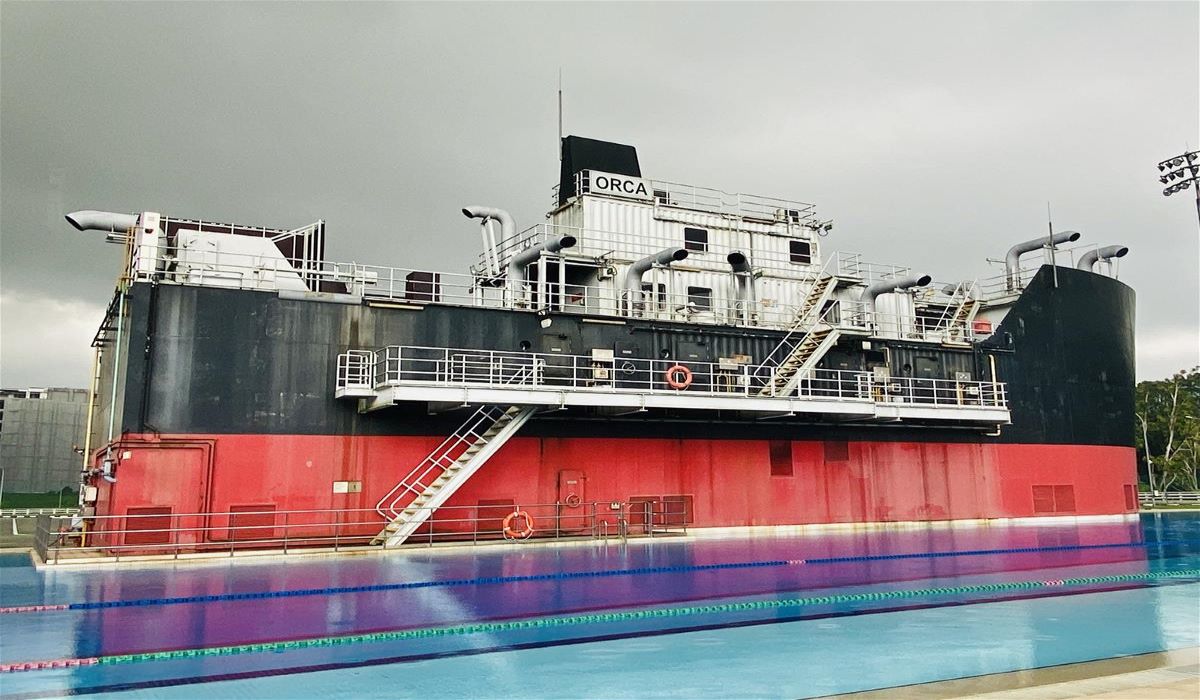
ORCA - A marine firefighting and rescue training facility that models after an actual sea vessel. PHOTO: SCDF
What is a day in the life as a marine specialist like?
WO Muhammad Ridzuan: Similar to all land fire stations, our duty follows a structured routine. We begin with a team muster and briefing at the start of duty to go through operational updates, safety reminders, and the tasks for the day, ensuring everyone is aligned and ready.
A key part of our routine is checking our vessels. This includes inspecting navigation systems, engines and firefighting equipment so that everything is operational and ready for deployment at any time. We also conduct outdoor drills to sharpen our response under realistic conditions.
Physical training is another important part of our routine, as fitness and endurance are the basis for marine emergency response. We also attend lectures and learning sessions to deepen our knowledge and stay updated on procedures.
What went through your mind when you were selected for the Marine Firefighting Specialist Course?
WO Muhammad Ridzuan: I have always been drawn to Marine Division and the unique challenges it presents. Working at sea requires a different level of discipline, teamwork, and situational awareness, and that is something I am deeply passionate about. I wanted to take on a role where I could continuously learn and contribute meaningfully.
The Marine Firefighting Specialist Course was a valuable opportunity to deepen my skills and knowledge in this specialised field. During the course, the experienced instructors provided a lot of insightful sharing which I could apply to real-life operations and enhance the safety and effectiveness of my team during incidents. Upon receiving my Marine tab, I felt a deep sense of pride and accomplishment.
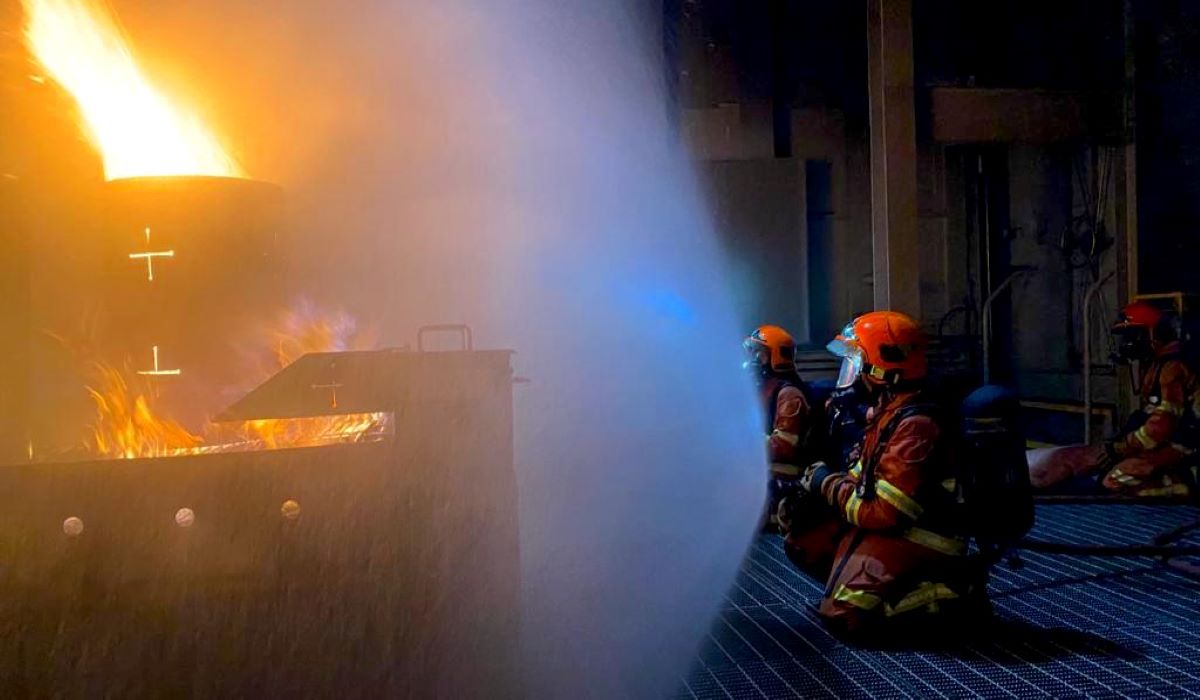
A training simulation inside ORCA. PHOTO: SCDF
What are some of the greatest differences between operating on land versus at sea?
WO Muhammad Ridzuan: Marine operations come with unique challenges. This includes operating specialised marine vessels and navigating the busy waters around Singapore.
One of the greatest challenges in marine is the unpredictable environment such as waves, currents, and weather. At sea, we need to consider distance, navigation routes, and changing sea conditions, which makes rescue work far more complex. However, these challenges can be overcome through preparation, continuous training and ground experience.
As an experienced Marine Section Commander and Officer of the Watch, it is important for me to understand the vessel’s capabilities and the terrain. This allows me to anticipate risks early and make informed decisions.
How do you strike a balance between ensuring your own safety and providing medical aid to others during marine firefighting operations?
WO Muhammad Ridzuan: Safety always comes first- we protect ourselves so that we can protect others. In every operation, we follow strict standard operating procedures, risk assessments and operate with a clear command structure.
The balance comes from rigorous training, strong situational awareness and constantly looking out for one another as a team. Marine firefighting is never a one-man job — it is always a coordinated effort where teamwork and communication are essential to getting the job done safely and effectively.
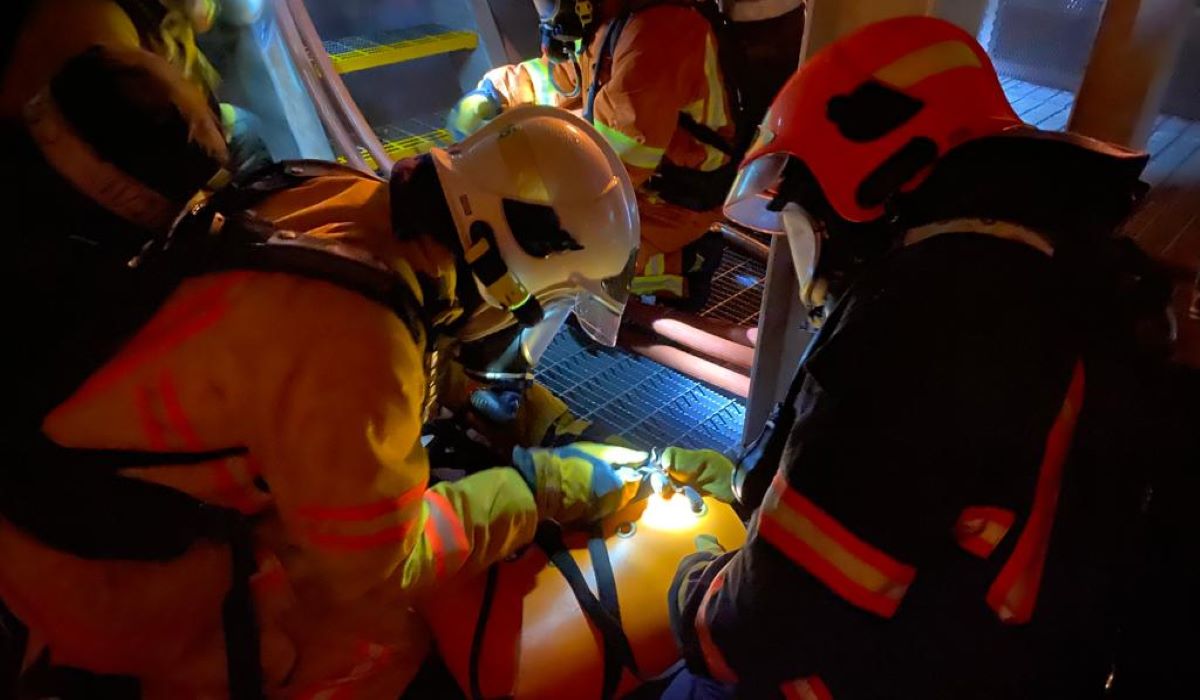
Marine Specialists stabilise a “casualty” before hoisting the “casualty” to safety in a training scenario. PHOTO: SCDF
Please share about an especially memorable operation in which you were part of the response team.
WO Muhammad Ridzuan: One operation that stands out vividly in my memory involved a rescue on a bunker vessel. My team and I had to rappel down about 30 metres into the vessel under challenging conditions — it was very dark and visibility was limited.
When we reached the casualty, our priority was to stabilise him and bring him out safely. We conducted a vertical hoist to bring him up to the main deck, before we transferred him to our vessel and transported him back to the mainland. This operation stayed with me because it reinforced the importance of training, teamwork and composure.
With the recent groundbreaking ceremony of Punggol Fire Marine Post and the upcoming completion of the new Marine Division Headquarters, how will emergency response be enhanced?
WO Muhammad Ridzuan: The new Marine Division Headquarters and Punggol Marine Fire Post will significantly enhance our readiness and response capabilities. With improved facilities, we now have better training environments and faster deployment capabilities. These expansions strengthen maritime operations and improve our emergency response. This is particularly important given the growing residential and commercial developments in the area.