
Mission Ready
HTX-Factor: Uncovering the Facts in the Aftermath of an Explosion
Home Team
HTA
HTX
25 May 2021
What kind of investigative work takes place at the scene of an explosion? Veteran HTX post-blast investigator Sito Wai Yip tells us more.
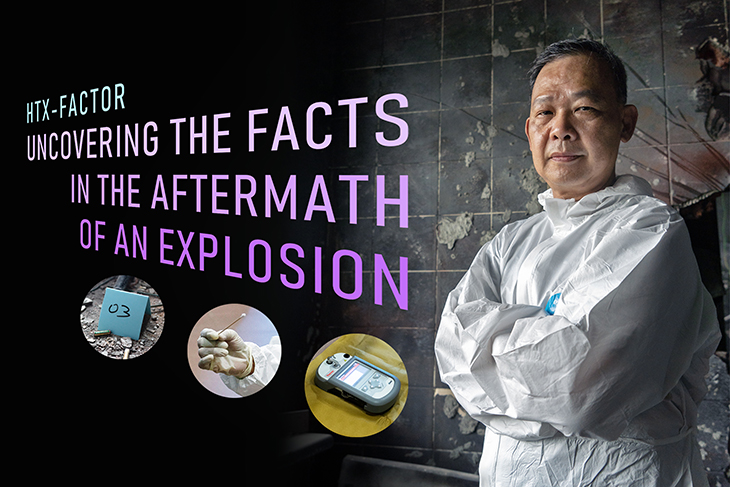
GRAPHIC: Home Team News
Boom! The explosion sends debris in every direction, reverberating through the neighbourhood. As debris falls to the ground, smoke billows from where the blast occurred.
Police officers quickly secure the area while emergency medical personnel attend to those who need help. In the middle of this scene, a team of Forensics specialists led by Sito Wai Yip of the Home Team Science and Technology Agency (HTX) begin their work. As Officer-in-Charge of HTX' Bomb Technical Team, Sito scans the debris with a practiced eye. Donning his Personal Protective Equipment, he makes his way carefully through the scene, looking for clues that will tell him how the explosion occurred.
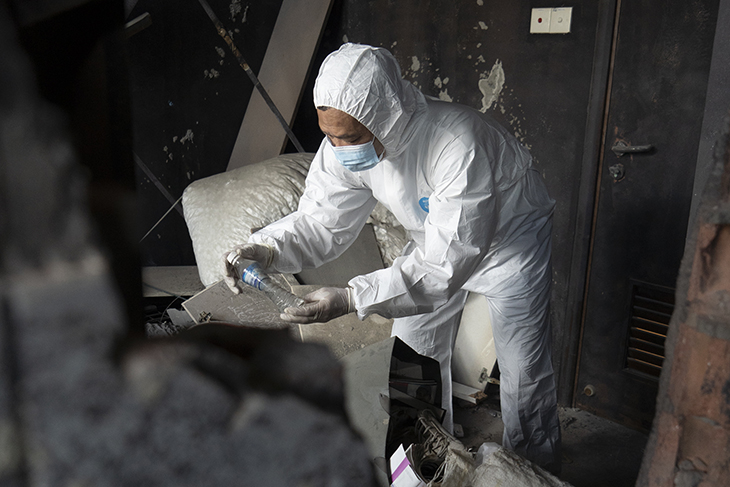
PHOTO: Soo Jun Xiang
Thankfully, we're not at the scene of an actual blast, but a specialised training room at the Home Team Academy, and Sito is demonstrating to us the post-blast evidence collection skills that are vital to his work. “Our job is to analyse the aftermath of an explosion,” he explains. “We want to find out what caused it, what explosives might have been used and who was involved.”
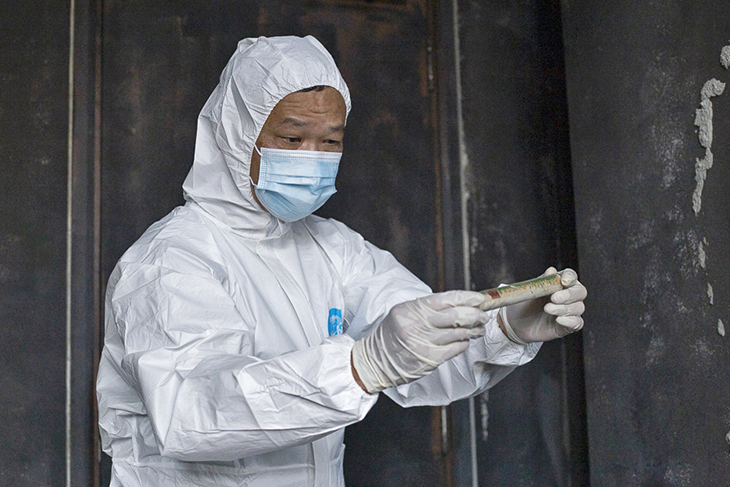
PHOTO: Joash Tan
A veteran investigator, Sito first entered this challenging field as a member of the Explosive Ordnance Disposal Unit of the Singapore Armed Forces. In 2010, he joined the Singapore Police Force’s (SPF) Bomb and Explosive Investigation Division. With the formation of HTX in 2019, Sito became part of HTX’ Forensics Centre of Expertise.
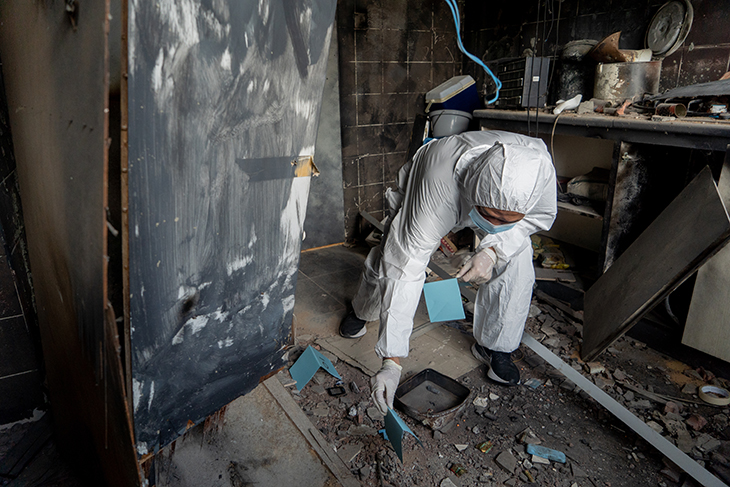
PHOTO: Soo Jun Xiang
“It’s very challenging because a blast site is very disordered, with many items broken and scattered about,” explains Sito. “We also need to work quickly so that we can collect evidence that will identify the suspects and prevent other potential emergencies.”
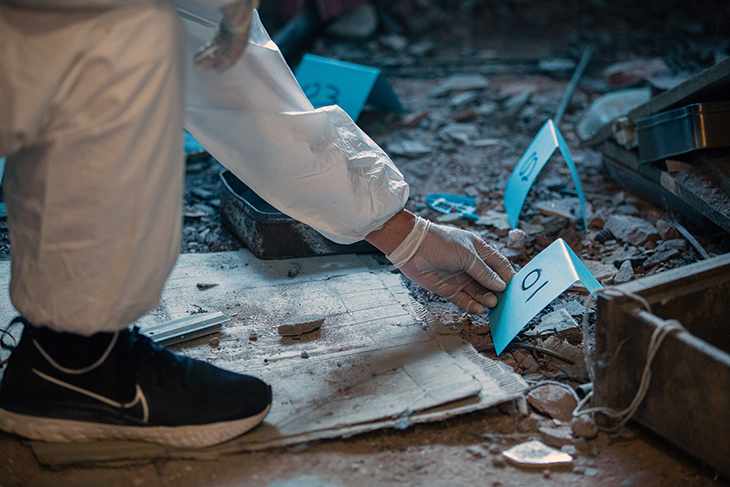
PHOTO: Soo Jun Xiang
Back at the Home Team Academy, Sito methodically checks a room filled with broken household items, careful not to disturb them. Sifting through the debris with a handheld analyser, he checks for traces of explosives.
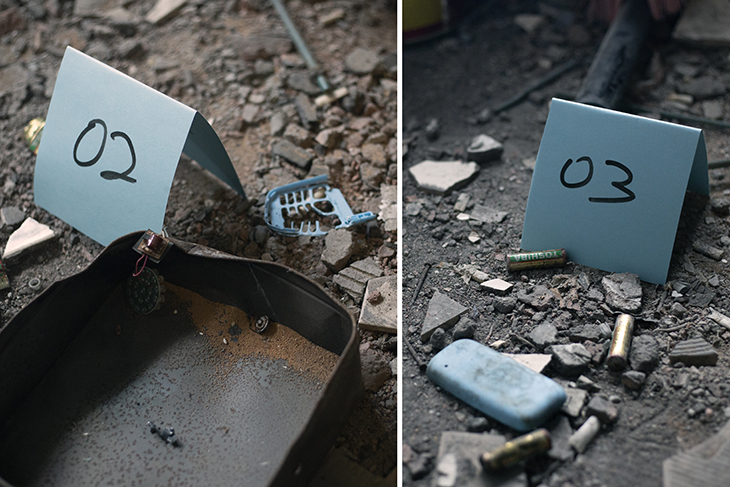
PHOTOS: Joash Tan
Sito then places numbered markers to document the scene before carefully collecting items for further analysis by his fellow HTX Forensics officers. Such evidence will help investigators apprehend the suspects and deter other such occurrences. “Every time we conduct a post-blast investigation, even in training, we won't know what may have caused an explosion,” says Sito. “So we’re always looking for clues among the disorder.”
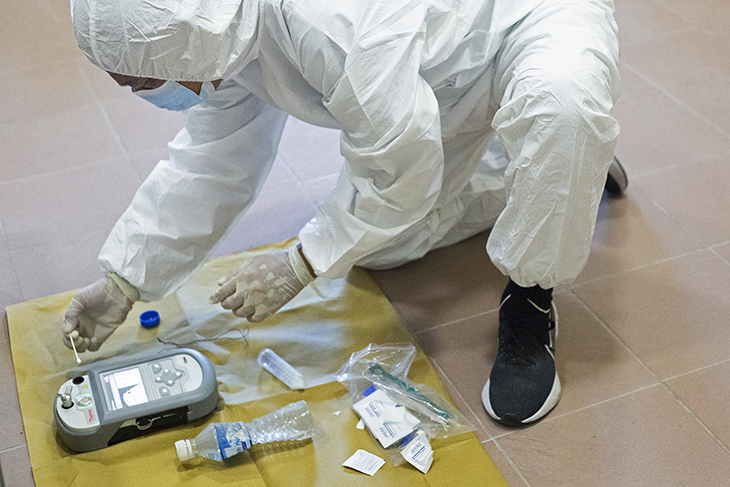
PHOTO: Joash Tan
Besides conducting on-site investigations, Sito also studies Improvised Explosive Devices (IEDs) and suspicious packages that have been left unattended. “We need to stay up-to-date in terms of knowing how explosives can be used,” he explains. “As part of our work, we’ll look at how common items can be refashioned into IEDs, for example. Such exercises help us to sharpen our knowledge and analytical skills.”
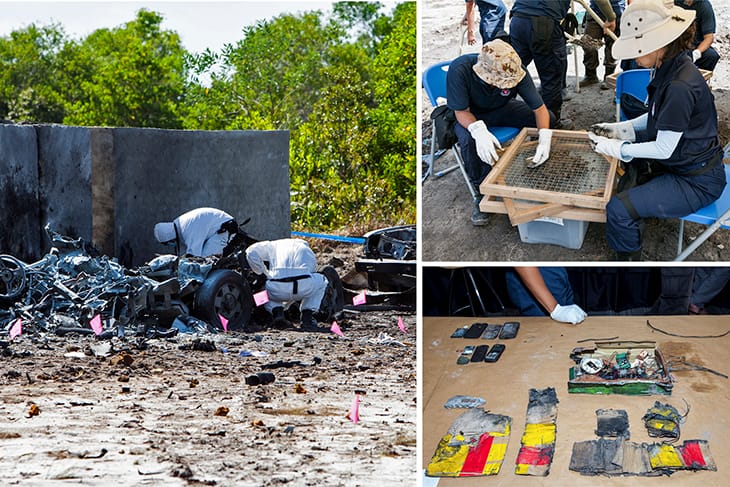
Exercise Solar Wind is a bilateral post-blast investigation exercise between SPF and the Royal Brunei Police Force. PHOTOS: HTX
To maintain his edge, Sito has also trained with law enforcement partners in other countries. In 2019, he took part in Exercise Solar Wind, a bilateral exercise between SPF and the Royal Brunei Police Force that covers various aspects of post-blast investigations. “Such exchanges allow us to raise our skills, learn about the latest trends and collaborate more effectively with our regional partners,” he says.
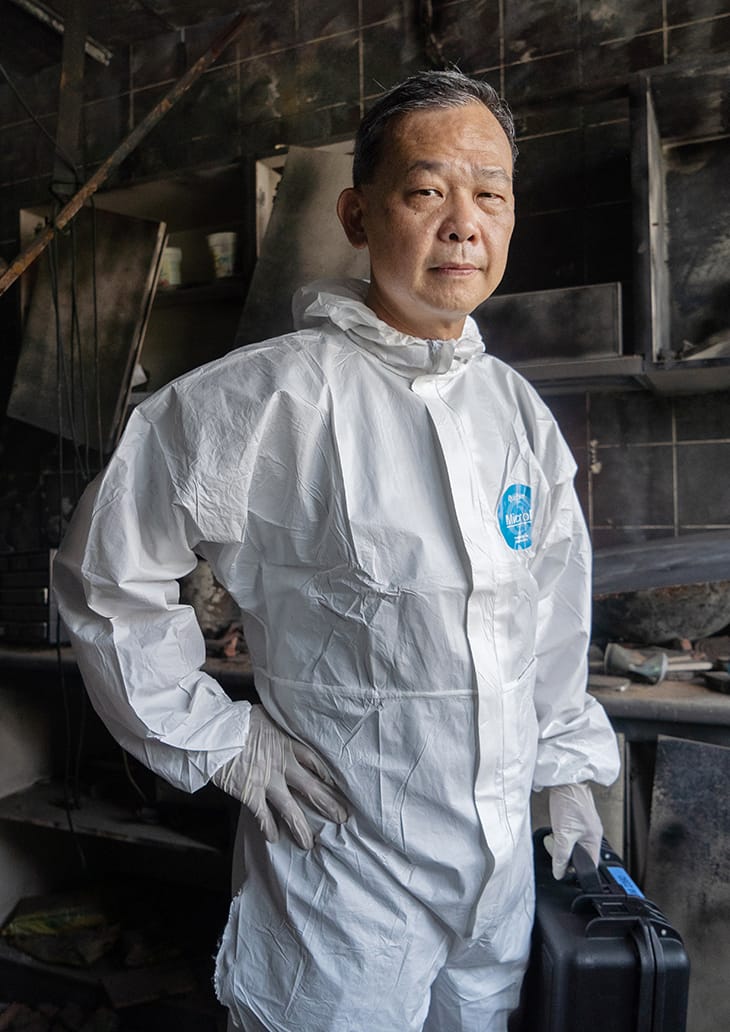
PHOTO: Soo Jun Xiang
What Sito enjoys most about his specialised field is that it allows him to bring together many different disciplines. “As post-blast investigators, we’re trying to work backwards in order to reconstruct a scene and catch the suspects,” he says. “To do this, we need to know about physics, chemistry, electronics, explosives and many other fields. It’s challenging work, but very meaningful.”