
Meet Our Community
The Human Touch: Transforming Training with Empathy
Home Team
HTA
ICA
25 March 2026
An award-winning trainer shares how empathy and putting learners first can transform even the most technical training programmes.
PHOTO: Immigration & Checkpoints Authority. GRAPHIC: Luc Yeo
“Put people first, and the rest will follow”.
This simple belief guides Deputy Superintendent (DSP) Ahmad Zaki bin Mohamed Zulkifli in his role as a Principal Trainer at the Immigration & Checkpoints Authority’s (ICA) Tactical Training Branch.
While this ethos has guided him across his nine years with ICA, it became especially significant since 2020 when he took on the responsibility of shaping ICA’s curriculum and facilitating training.
“I am always putting myself in learners’ shoes and trying to learn together with them. I ask myself how I can better explain concepts and how I can make it easier for them to not just acquire new knowledge, but also retain it better,” he says.
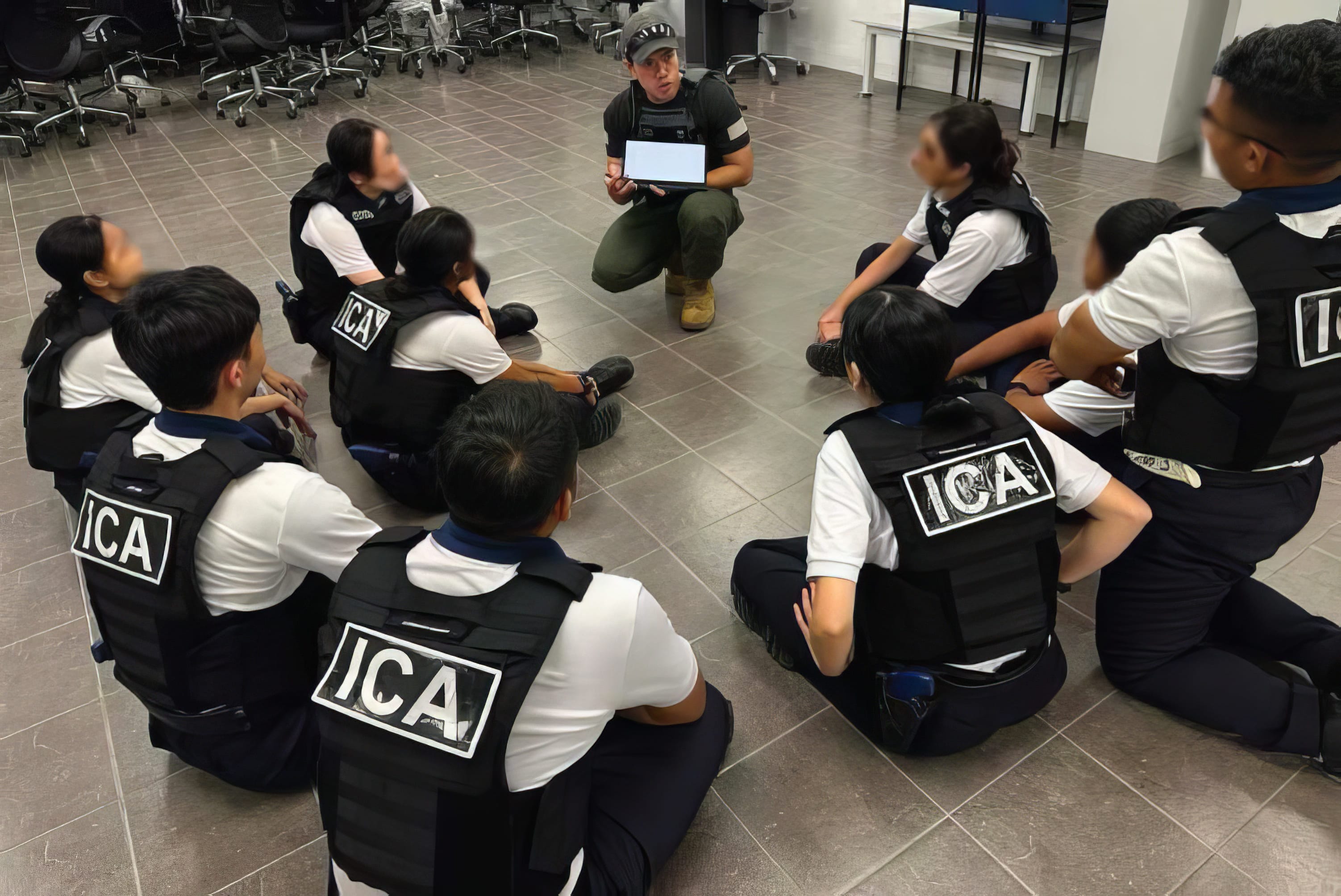
DSP Zaki (centre) emphasises a learner-centred approach in his training methodology. PHOTO: ICA
Low-Tech Solution, High Rewards
One example of DSP Zaki’s learner-centred approach is his development of visual learning aids for First Response Team (FRT) training. The aids were built upon his own learning experience undergoing FRT training earlier in his career.
He explains, “I recalled that a lot of the instructions given to us are verbal. I thought about it as a learner and realised I could benefit from visual guidance to follow what the trainers were saying.”
He enhanced drill demonstrations with miniature models, allowing trainees to get a better overview of the tactical situation. He also handed out flash cards containing colour-coded illustrations to drive the learning home.
It was a deceptively simple innovation with outsized outcomes, demonstrating the trainer’s adaptability even with the advent of novel training technologies. In his own words: “Sometimes, the low-tech solution can yield the highest rewards in terms of benefiting learning.”
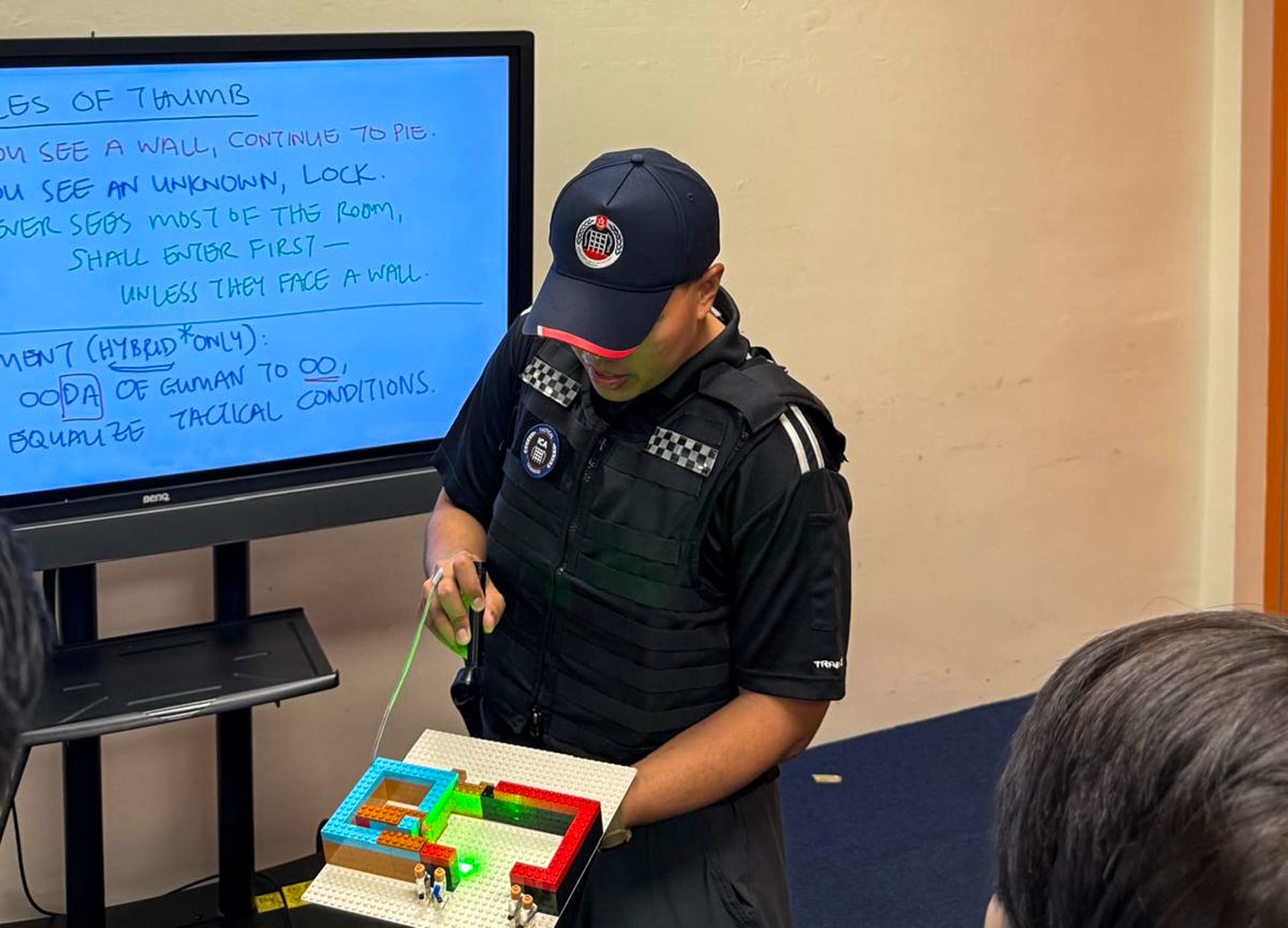
DSP Zaki's innovative visual learning aids include miniature tactical models to enhance trainees' understanding of complex scenarios. PHOTO: ICA
He went on to contribute to the development of the FRT training programme at the Home Team Tactical Centre as well as e-learning materials and Table-Top Exercises for Major Incident Management Doctrine trainings.
A Lead Learner
For his efforts, DSP Zaki was honoured at the Home Team Training Excellence Awards Ceremony 2025. He was one of 18 trainers across 10 units to be commended for shaping the Home Team’s (HT) frontline readiness and operational excellence.
DSP Zaki sees the award as evidence for the strength of Home Team Academy’s lead learner methodology.
He explains, “Being a lead learner means creating a learning environment that is learner-first. It’s not hierarchical with a thick line between trainer and learner – it’s more open-minded and collaborative.”
“We try to reward learning from mistakes, instead of just spoon-feeding answers or giving direct guidance. It requires me not to expect them to do something that I wouldn’t myself – so if I expect them to demonstrate a tactic, I must show them how to do it in the best way possible,” he adds.
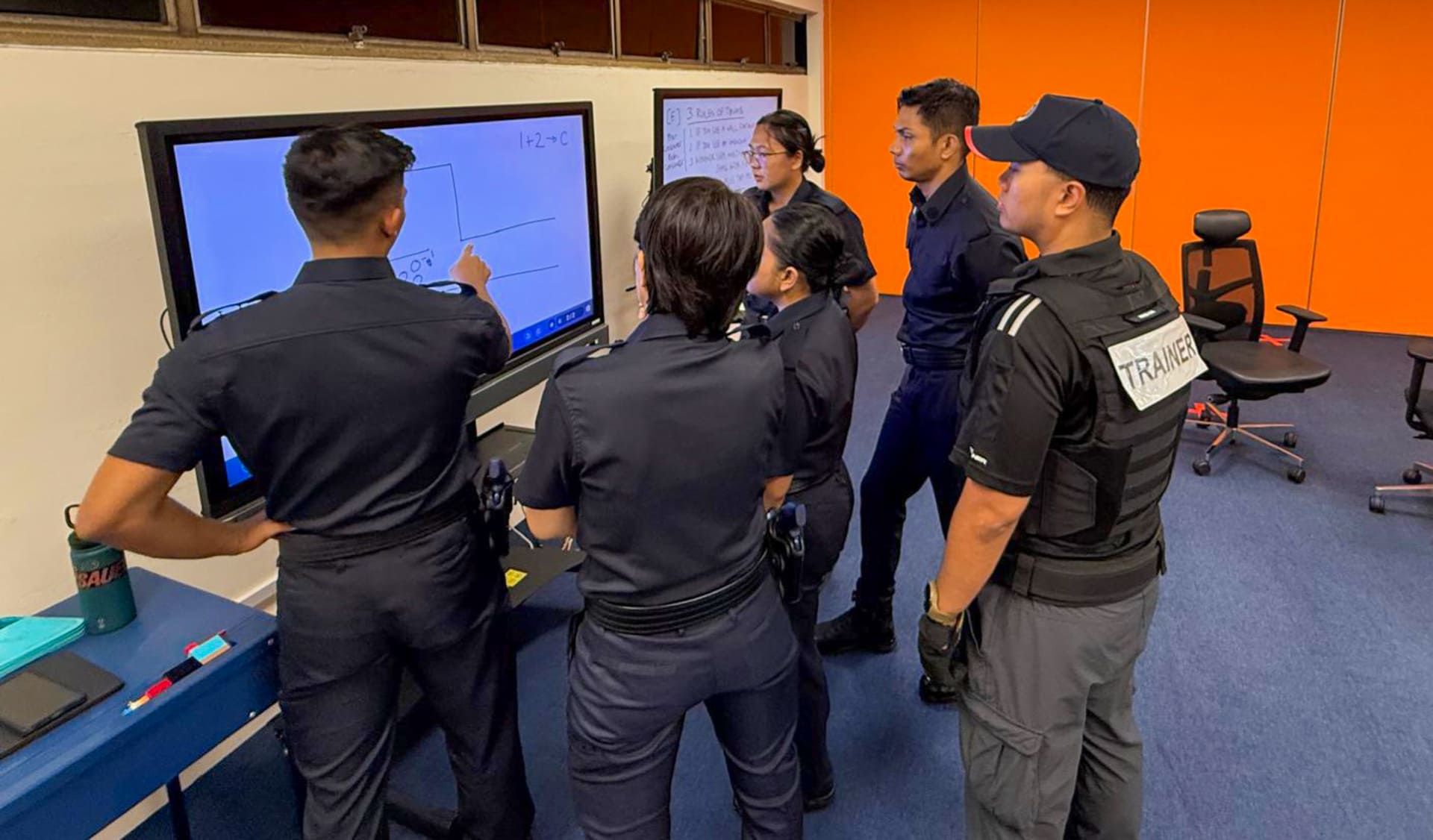
DSP Zaki (right) observes as trainees engage in discussion during training, exemplifying his belief that effective learning happens when trainers step back and allow collaborative dialogue to flourish. PHOTO: ICA
One of his fondest training memories revolves around learning together with his trainees. He recalls participating as an observer and role player in Exercise Genesis, a multi-agency ground deployment exercise at Tuas Checkpoint in 2022.
“I had candid discussions with some of my trainees who had become FRT operators there,” says DSP Zaki. “When they were going through the dry runs, I could see them applying what they had learnt during the course – and during break times, we would get together to discuss how we could improve the response.”
“I treasure the experience because it was evidence of the learning and the hard work from both my colleagues and myself,” he says.
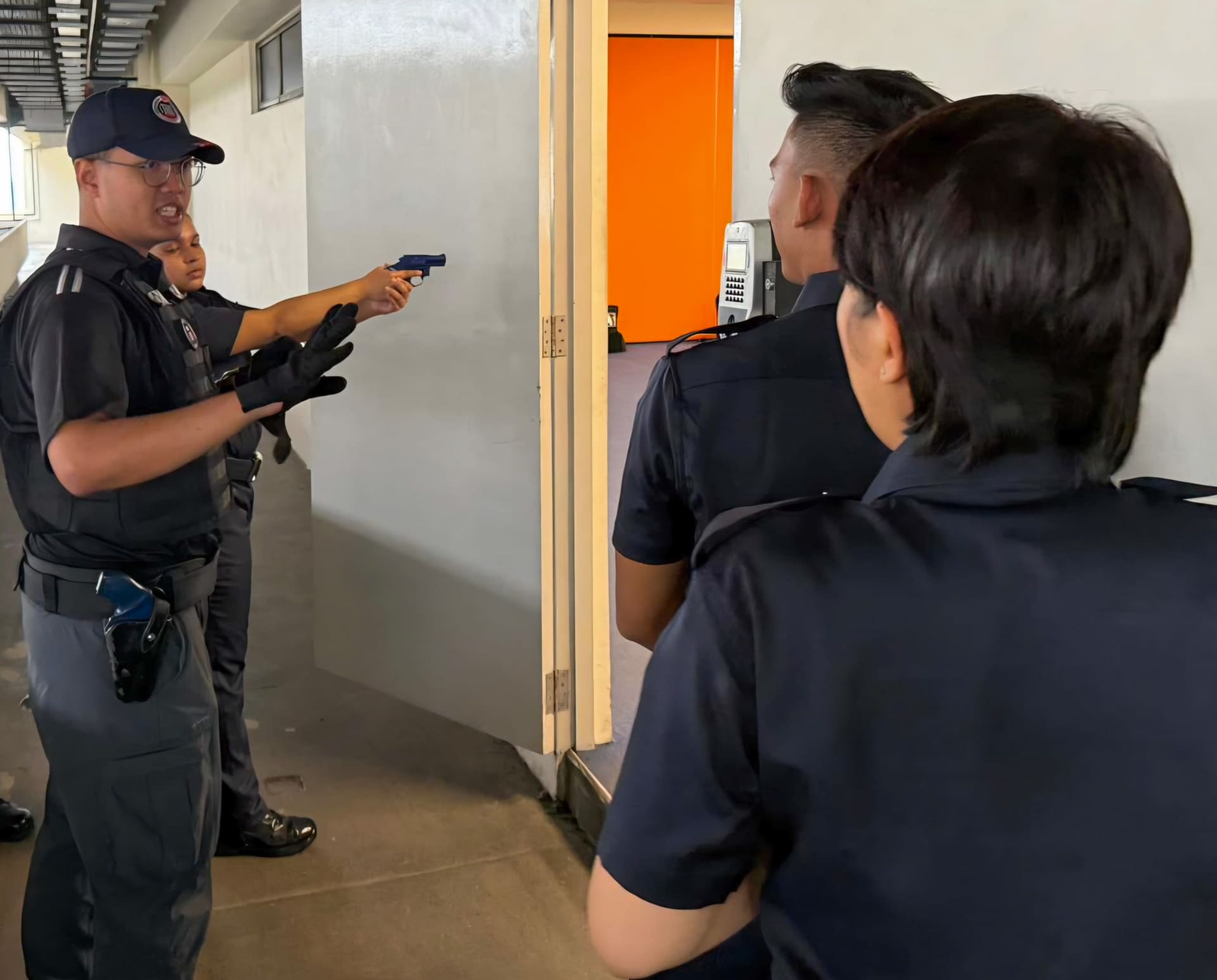
Drills provide valuable opportunities for trainers and trainees to collaborate and refine tactical response techniques. PHOTO: ICA
Focus on the Human Touch
DSP Zaki’s advice to other trainers in the HT family – don’t lose sight of the trainees while improving on training tools.
“There’s a lot of technological advancements and sometimes, we get caught up in the trends. That’s all well and good – we have to find new ways to make our work more efficient – but we must focus on the human touch,” he says.
“Stay humble, put learners first, find new ways of communicating with them and ensure that the learning experience is shared between learners and trainers too,” he adds. “Our work is only as meaningful as the impact we have on the people we train.”