
Meet Our Community
Training with Purpose: Building Resilience Through Realism
Home Team
HTA
SPS
27 February 2026
An award-winning trainer shares how he prepares prison officers to make the right decisions in real-life prison operations.
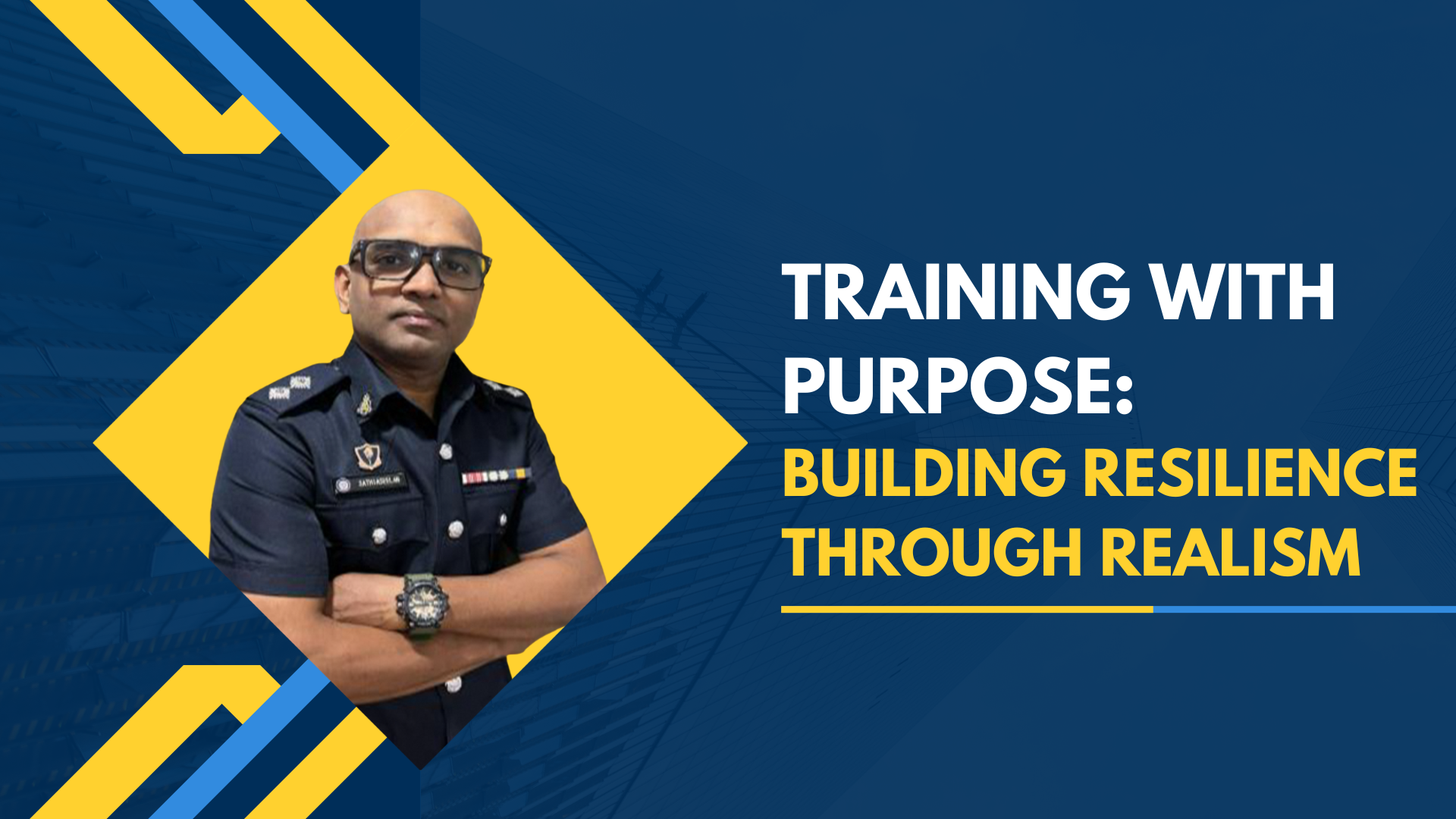
PHOTO: Singapore Prison Service. GRAPHIC: Tham Yee Lin
Even after 24 years of dedication to the Singapore Prison Service (SPS), a lesson from one of Rehabilitation Officer (RO1) Sathiaseelan Thurasingam’s first trainers remains fresh in his mind.
“Back then, during a routine cell unlock, an inmate refused to obey instructions and became agitated. My trainer didn’t react with force. Instead, he stayed calm, gave clear verbal commands, and used communication to defuse the tension. Watching that unfold taught me something important – tactical control begins with emotional control,” says the Senior Correctional Unit Officer at Institution B2.
It was a watershed moment of clarity for RO1 Sathiaseelan – one that he now hopes to pass on as a trainer for the next generation of SPS officers in Cluster B and B2.
Immersive Training Scenarios
Armed with knowledge from self-development courses like the Home Team Academy’s (HTA) Upgrading Professionally through Specialist Certificate in Adult Learning Education (UP-SCALE) Programme, he designed and implemented practical simulations of operational scenarios to amplify officer training.
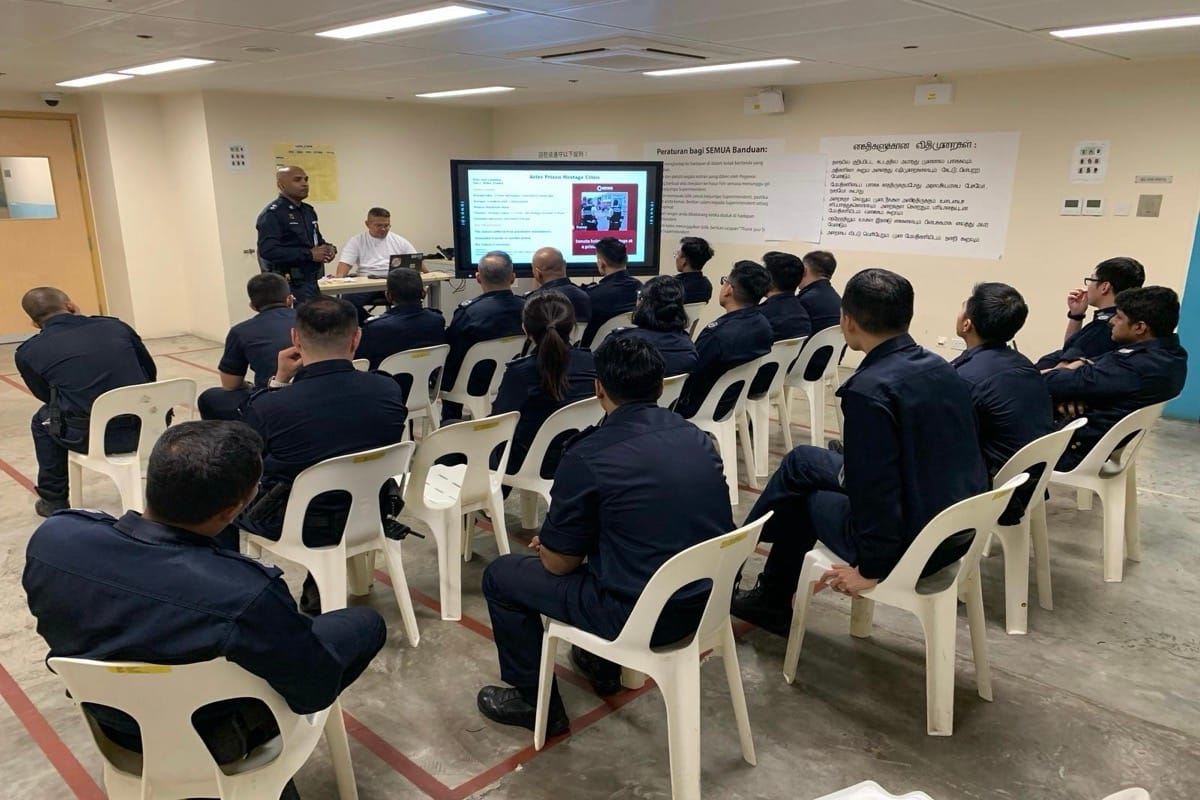
RO1 Sathiaseelan (standing) believes that relying only on learning standard procedures during lectures will never give officers as strong a foundation as being in an actual situation. PHOTO: Singapore Prison Service
Technology-driven pedagogical aids like CCTV replays, AI-generated visuals and live role-play intensify the realism and pressure of the situations while maintaining a safe learning environment. Simulations also give RO1 Sathiaseelan the opportunity to pause the exercise and encourage reflection before officers take their next action, in line with adult learning principles like Kolb’s Experiential Learning Cycle.
“Scenario-based training can help officers connect emotionally and mentally to what they are learning. It builds confidence and instinct – both things you can’t get from a classroom lecture alone,” he explains.

RO1 Sathiaseelan (second from left) facilitating a scenario-based training exercise that prepares officers to respond calmly and effectively in real operational situations. PHOTO: Singapore Prison Service
This immersive, human-centred teaching approach ensures that learning goes beyond the classroom. RO1 Sathiaseelan recalls guiding an officer to the right decision during real-life prison operations dealing with an agitated inmate using the same stop-and-think methodology.
When the same situation arose a few months later, the officer had a markedly different response. “I didn’t say anything and sat back to observe what would happen. The officer led his fellow officers with the correct instructions. I told him how impressed I was,” he says.
The Role of a Trainer
The incident demonstrated one of his core teaching beliefs – that trainers are first and foremost a guiding compass. “We don’t ascribe or fix the route they have to go. My job is to help them reflect, guide them and build their mental resilience – the rest is up to them,” he elaborates.
RO1 Sathiaseelan’s outstanding performance was recognised at the Home Team (HT) Training Excellence (TraX) Awards Ceremony 2025. He was one of 18 trainers across 10 training units to receive commendations for his contributions to the development of knowledge in the HT family.
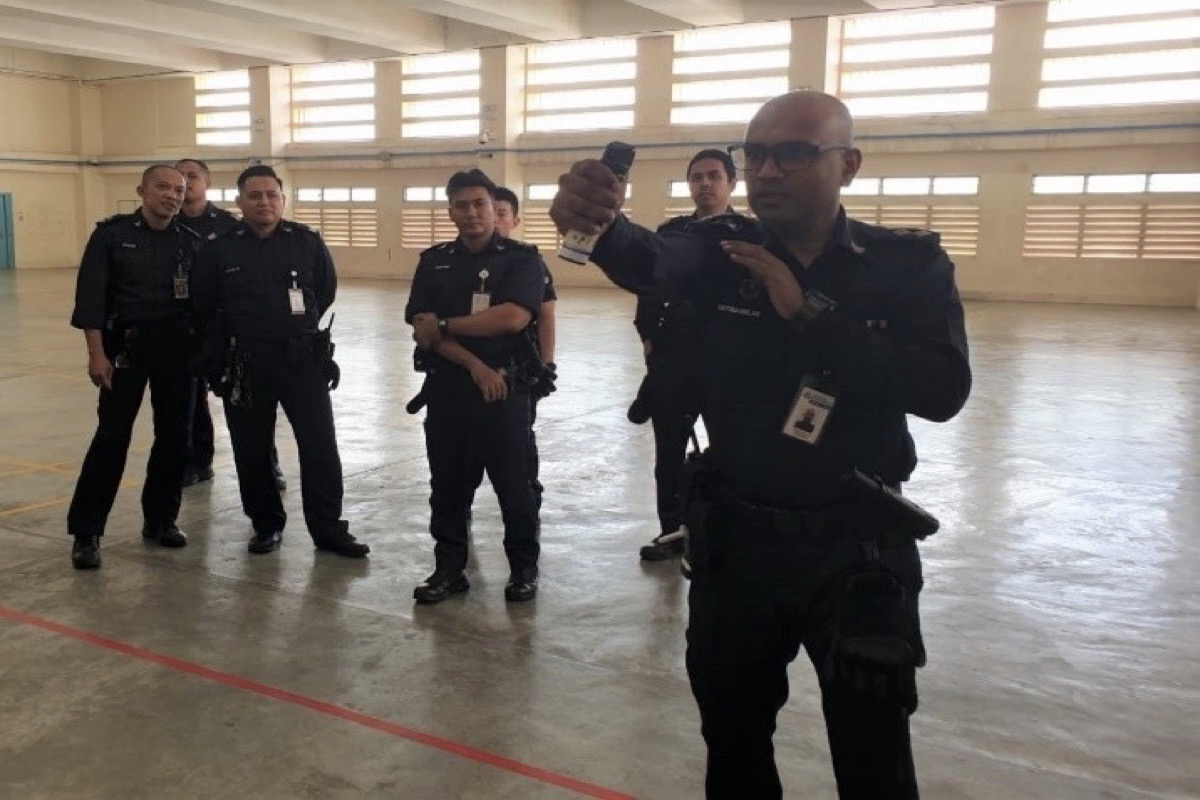
RO1 Sathiaseelan (first from right) demonstrating the proper technique for the Oleoresin Capsicum Delivery System as part of hands-on tactical skills training. PHOTO: Singapore Prison Service
Next on the horizon for the officer: splitting his time between his duties, improving the education of SPS officers as adjunct trainer at HTA’s Singapore Prison Training Institute and securing a Psychology degree at Murdoch University.
“I want to learn about human beings – scientifically, and practically. This course gives me insight into how I should handle certain situations, how to read people, and why they behave or think this way,” he explains. Perhaps most crucially, his learnings about the human brain apply both to the inmates under his purview and the officers he trains.
“Embrace lifelong learning,” says RO1 Sathiaseelan. “That is my advice to all HT officers. Every experience, whether good or bad, is a lesson. Stay curious, stay grounded and never stop improving yourself.”
“In the HT, how we learn shapes how we serve, and ultimately how we serve shapes the trust we build in the community.”